Carried at Speed: The Quiet Duty of a Memorial Livery in Club Oval Racing
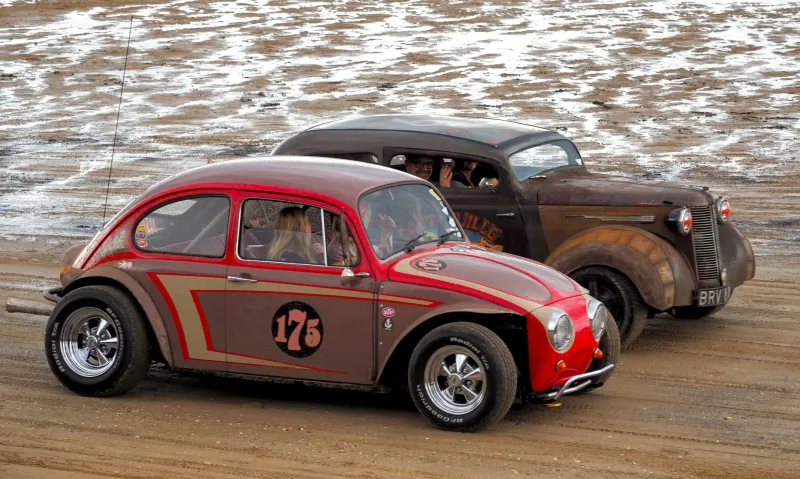
You see it before you see the driver: a name in white vinyl on the roof, a date small enough to miss, a number that used to belong to someone else. At a club oval on a damp Saturday night, the cars file past the pit gate and the roofline becomes a moving noticeboard. Most of the time it is sponsorship, a novice cross, a cheeky nickname. Sometimes it is a memorial livery. And when it is, nobody needs the PA to explain.
Memorial liveries are not a new idea in UK short-track racing. They have been part of the furniture for as long as families have been racing the same cars and the same corners. But they have become more visible in recent seasons, partly because vinyl is cheaper and easier to design, partly because social media gives a paddock tribute a longer life than a single meeting. The result is a quiet tradition that now sits right alongside the bright colours and hard racing of the club scene.
The vinyl that does the heavy lifting
A memorial livery can be anything from a small roof sticker to a full respray. The most common version is deliberately understated: a name on the roof, a set of dates, maybe a club logo or a favourite slogan. It is cheap to produce, easy to remove if the family asks, and visible from the bank without being shouty. The next step up is a special colour scheme: the car painted in the colours of a lost driver, or in the colours of a family member who never raced but was always in the pits.
One crew chief at a Midlands short oval put it simply: 'You are not just putting a sticker on a car. You are putting somebody back in the passenger seat.' That sounds sentimental until you watch a heat race. Then it makes perfect sense. The car still has to turn left, still has to find grip, still has to survive a first-lap shunt. The tribute does not make it slower. If anything, it raises the stakes.
The work usually starts in the workshop, not the signwriter's. Teams talk to the family first. They ask what name to use, whether dates should be included, whether a nickname is appropriate. A sticker that reads 'Dad' means one thing to a family and another to a crowd. The best memorial liveries are the ones that feel like they belong to the people named on them, not the people racing them.
Permission before paint
That is the unwritten rule: ask. Just because a driver was popular in the paddock does not mean their family wants their name on a car that might end up in a heap at the end of the back straight. Some families love it and turn out to see the car run. Others prefer a minute's applause, a programme note or a bench by the pit gate. A memorial livery is a public gesture, and public gestures need consent.
There is also an etiquette about copying. If a car runs a tribute to a local legend, that does not mean every other car in the formula should run the same sticker. The tribute works because it is specific. It carries a story. A generic memorial design can feel like a uniform, and a uniform is the opposite of what a club oval is about.
Commercial use is another line. A memorial livery should not become a sponsorship opportunity, a merch design or a way to sell space on a roof. The moment it does, the paddock notices. Club racing is small enough that reputation travels faster than any car.
Racing with a passenger
On track, a memorial livery does not change the rules. The car still has to pass scrutineering, still has to carry a readable number, still has to race hard. But drivers talk about it differently. Some say they are more careful in the first few laps. Others say they drive it harder, because a tribute car that trundles around at the back feels wrong. The truth is probably somewhere in between: you race it like any other car, but you feel the weight of it when you close the door on someone.
That weight is not a burden. It is a reminder. Grassroots oval racing is a sport built on families, volunteers and long-standing friendships. A memorial livery is one of the few places where that side of the sport is visible at speed. It tells a spectator who knew nothing about the driver that this car matters to someone. That is a rare thing in any sport, let alone one run out of a paddock on a Sunday morning.
When the sticker comes off
Cars get reshelled. Teams change hands. A memorial livery that was right for one season may not be right for the next. The etiquette here is simple: the tribute belongs to the family, not the chassis. If a car is sold, the sticker should go with the blessing of the people named on it, or it should come off. A new owner should not inherit a memorial by accident.
Some clubs now keep a record of memorial liveries, not as a formal register but as a nod to the history. A photograph on the club website, a line in the programme, a note in the yearbook. It is a small thing, but it helps. It means the tribute is not just a sticker on a roof that disappears when the car is rebuilt.
Why it matters at club level
At the top of the sport, liveries are brand management. At club level, they are something closer to memory. The paddock is full of people who have been coming to the same track for decades. They remember the driver who always parked in the same spot, the mechanic who lent a spanner to anyone, the teenager who grew up in the back of a van. A memorial livery is a way of saying that those people are still part of the meeting.
It is also a reminder that grassroots racing is not just about the fastest car. It is about the people who build it, tow it, fix it and stand in the cold to watch it. A roof sticker cannot replace any of that. But it can carry it at race speed, which is arguably the most fitting tribute a club oval can offer.