Nobody Races Alone: The Unwritten Rulebook of the Paddock Parts Pool
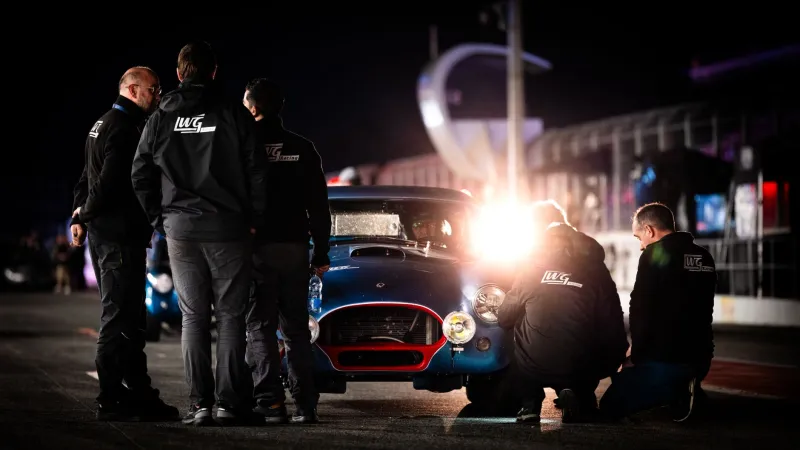
There's a moment at every club oval meeting that tells you more about the sport than any heat result. It's not the start. It's the twenty minutes before it, when a bloke in overalls is stood in the middle of the paddock holding a broken component aloft like a question mark, and three separate people start walking towards him.
By the time the parade lap is called, that broken thing has been replaced by something off another car, and the thanks have been logged somewhere between a handshake and a WhatsApp message that reads, simply: owe you one.
That's the bit of UK short-track racing nobody films. So over the 2026 season we made a point of watching it.
The shop that has no shelves
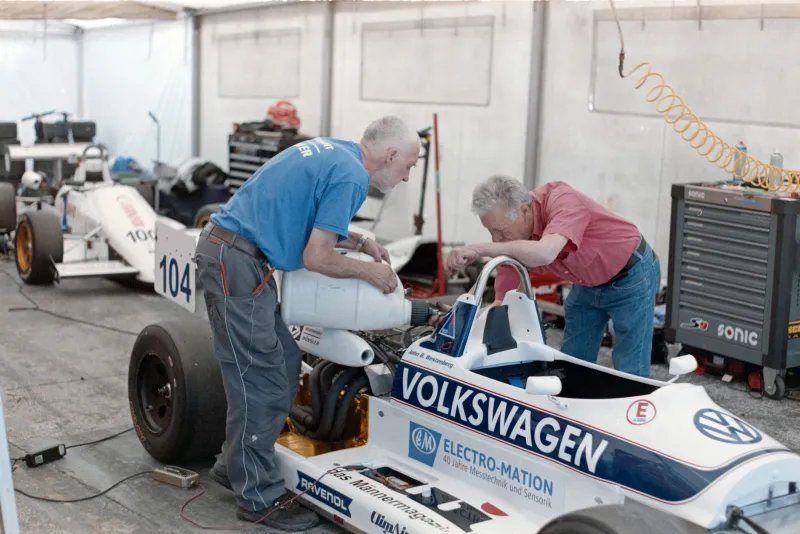
Call it a swap shop, a lending library, a favour economy — nobody in the pit lane has agreed on a name for it, which is probably why it works. There's no committee, no stock list and no paperwork. What there is, in practice, is a few hundred people who know exactly what everyone else runs and roughly who's got a spare of it.
A banger racer will tell you it's simple: you carry what you can, you share what you don't need, and you remember who sorted you out at Belle Vue in the rain.
"I've driven home with less than I arrived with, plenty of times," one F2 pilot told us between races at a Midlands shale meeting in July. "But I've never driven home without a car that could race. That's the deal. Nobody says it out loud, but that's the deal."
WhatsApp, the real pit wall
If the paddock is the shop floor, the group chat is the stockroom. Club-level racing has quietly become a logistics operation run on messaging apps, and the 2026 season only tightened that grip.
A typical Thursday night in one club's group goes something like this: a photo of a cracked component, a question mark, then within eleven minutes three replies — one offering a spare from a shelf in a garage near Boston, one offering a loaner from a car that's not racing this weekend, and one pointing out, correctly, that the first two people are describing the same part but only one of them has the right bolts.
By Friday lunchtime a plan exists involving a meet-up at a motorway services. By Saturday the part is fitted. Nobody invoices anybody. The whole transaction costs a tank of fuel and a bacon roll.
What's striking is how specific this knowledge is. These aren't generic parts catalogues. They're mental inventories — who's got a spare wing for a car that hasn't turned a wheel since March, whose shed contains the exact gearbox everyone else has given up on, which family keeps a trailer of "might come in handy" that has saved more race nights than any sponsor ever has.
The rules nobody wrote down
Spend enough time loitering near a scrutineering bay and a rough code emerges. It's never posted anywhere, but everyone seems to know it.
- You ask, you don't take. Even when the spare is obviously sat there doing nothing.
- You return it better than you got it. Cleaned, at minimum. Repaired if it's within your gift.
- You offer first, or you don't offer at all. The fastest way to get frozen out is to lend loudly and remind people about it.
- You pass it on. If you're the third link in a chain that got a car to the grid, the part doesn't stop with you when you're done.
- You never lend something you'd need to win. There's an understanding that a favour shouldn't cost the person doing the favour their own race night.
The last one is doing a lot of unspoken work. It's what keeps generosity from turning into a quiet form of pressure.
Why it matters more at club level
Anyone who's priced up even a modest short-track campaign knows the arithmetic is unforgiving. Travel, tyres, entry fees, the inevitable panel damage — a single mechanical failure in June can quietly end a season in July.
That's the practical case for the parts pool. When the margin between racing and watching is one component, a borrowed one isn't charity — it's the difference between a grid of fourteen cars and a grid of nine.
But there's a second case, and it's the one that kept coming up in conversation. The lending culture is how new people get pulled in and kept in. A rookie who turns up with a second-hand car and no contacts is, technically, completely alone out there. In reality they get absorbed within about two meetings, usually via somebody handing them a thing they didn't know they needed.
"I turned up not knowing a soul," one Ministox parent said. "By the end of the first night I had a borrowed trolley jack, a phone number for a welder and an invitation to a barbecue. Try getting that at a track day."
The limits of the favour economy
It isn't a fairy tale, and nobody who's been around the sport pretends otherwise. Favourites exist. Old grudges travel. There are people who take more than they give, and people who keep a mental ledger so precise it could be audited.
There's also the honest risk of the thing — lending a part that then fails on somebody else's car. It happens. The unwritten response, almost universally, is that a loan is a loan, not a warranty, and the person who fitted it carries the outcome.
What the culture does seem to do well is absorb those frictions before they curdle. Most disputes get settled with a handshake and a promise about next season rather than a Facebook post.
The thing worth protecting
As the 2026 season shuffled towards its winter lay-off, we watched paddocks empty in the usual order: cars first, then toolboxes, then the small knots of people still talking by a trailer in the dark, working out what's needed to get somebody out again in March.
That conversation — what have you got, what do you need — is the least televised part of British oval racing and arguably the most important. It's a form of insurance that no governing body could ever write into a rulebook, and it's already in place at every club you could name.
So the next time you see a racer jogging across the paddock with a component under their arm and a slightly apologetic expression, know what you're looking at. That's not desperation. That's the system working exactly as it should.