Cash, Cackle and Cardboard: A Night at the Club Oval Spares Auction
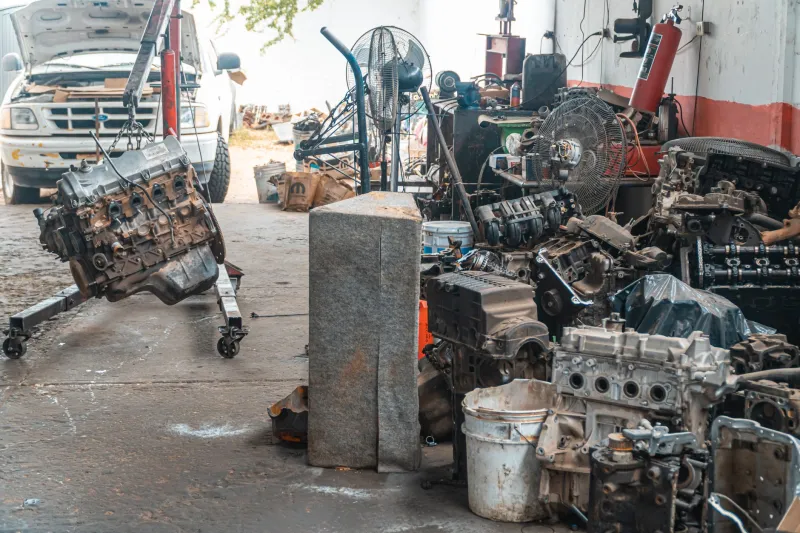
The season has been over for three weeks, but the car park at Fenmoor Raceway is still half full. Instead of race suits and tyre warmers, people are carrying cardboard boxes, carrier bags and the occasional complete front hub assembly. The scrutineering shed has been swept out, the inspection lamps pushed to one side, and a trestle table now runs the length of the bay like a very oily altar.
This is the club's winter parts auction. No glossy catalogue, no online bidding platform, no buyer's premium. Just a handwritten lot list, a tea urn that has seen better decades, and a bloke called Ray who has volunteered to be auctioneer because he once did it at a village hall fundraiser and nobody has let him forget it.
The rules of the shed
By seven o'clock the shed smells of chips, diesel and the faint ghost of burnt clutch. There is a rule, announced on a whiteboard by the door: cash only, no reserve, and if you win a lot you carry it out yourself. Another line, in smaller marker, says: no fighting over the boxes. It has clearly been added after previous experience.
The club fund is the quiet beneficiary of all this. Every lot is donated by members clearing out garages, trailers and the back of the workshop. The proceeds go towards track equipment, first-aid supplies, insurance excess and the endless small costs that never appear on a race entry. Last year's auction, according to the club treasurer, paid for a new set of cones and a replacement water pump. Not glamorous. Utterly necessary.
Lot 14 and the £20 box
Halfway through the evening comes the bit everyone has been waiting for. Lot 14 is described on the list as "miscellaneous box, contents unknown, possibly useful." It is a battered removal box, taped at the corners, with a faded label that once said something about brake fluid.
Bidding starts at a fiver. A teenager in a hoodie goes to six. A bloke in a flat cap who has been quietly buying steering wheels all night goes to eight. Then someone at the back says ten, and the room does that low, amused murmur that means it is about to get silly.
Twelve. Fifteen. Eighteen. Twenty. The gavel comes down at twenty pounds, which is roughly the price of two decent bacon butties and a cup of tea at a race meeting, and the winner carries the box out to the back of his van with the expression of a man who has just signed a striker on transfer deadline day. He does not know what is in it. Nobody knows what is in it. That is exactly the point.
Bargains, banter and the real transfer window
The comparison is unavoidable. Football has its January window, its loan deals and its eye-watering fees. Club oval racing has a Thursday night in a shed, where a pair of part-worn slicks goes for the price of a takeaway and a box of random spares changes hands for twenty quid. It is not glamorous, but it is the mechanism by which next year's grid gets rebuilt.
A teenager buys a set of wheels for less than the cost of a tank of fuel. A father-and-son team picks up a gearbox they have been chasing all season. Someone else wins a box of assorted bolts and spends the drive home arguing with his mate about whether any of them are the right thread. The parts move from garage to garage, from one project to another, and somewhere in all that cardboard and rust is the raw material of a new season.
The mystery boxes are the heart of it. Most are exactly what they say on the tin: miscellaneous, half-forgotten, probably rubbish. But every so often one contains something genuinely useful — a good carburettor, a set of matching springs, a couple of brake calipers that still have life in them. The possibility is what keeps the bidding going. It is the same instinct that makes people buy raffle tickets and second-hand cars, just with more tea and less paperwork.
The quiet economics of a club oval
Fenmoor's auction will raise a few hundred pounds on the night, maybe a bit more. It will not transform the club's finances. It will not pay for a new grandstand or resurface the track. But it will cover the small, stubborn costs that eat into every grassroots oval: the safety gear that needs replacing, the volunteer expenses nobody likes to claim, the tea bags and milk that keep a work party going.
And it does something less tangible, too. It gets people into the shed in the off-season. It gives the rookies a chance to meet the old hands without the pressure of a race night. It turns a pile of surplus parts into a conversation, and a conversation into a plan for next year. By the time the tea urn is empty, half the room has agreed to help someone else fit a roll cage in February.
Carrying it home
The last lot is a set of part-worn tyres, sold for fifteen pounds to a man who already has a trailer full of them. He does not need them. He just cannot resist a bargain, and the club fund gets another few quid.
The shed empties slowly. People load boxes into boots and trailers, compare purchases, and promise to send each other photographs of whatever was actually inside the mystery box. Ray puts the gavel down, which is actually a torque wrench, and someone starts stacking the trestle tables.
It is not the most dramatic night in oval racing. There is no chequered flag, no last-lap pass, no roar of engines. But it is grassroots oval racing in its purest form: a community turning its spare parts into next season's possibilities, twenty pounds at a time.