The Bonnet-Drop Clock: How Club Crews Decide to Mend, Miss or Move On
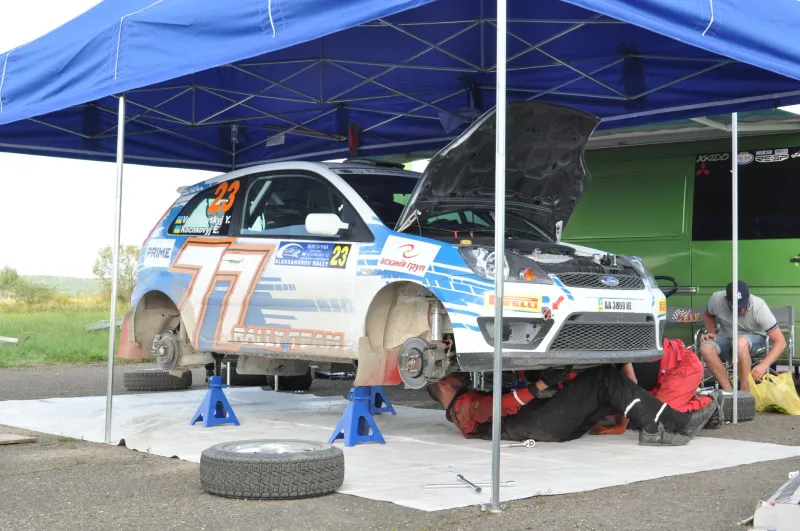
It is 1.42pm on a damp Sunday in the Midlands and car 37 has just come in wrong. The front right corner is folded like a crisp packet, there is a hiss from somewhere under the bonnet, and the driver is already out of the door, helmet off, staring at the damage. Nobody shouts. That is the first thing you notice. The crew chief walks a slow half-circle around the car, crouches, then looks at his watch. He does not say it out loud, but everyone in that corner of the paddock knows the number he is thinking: ten minutes.
There is no written ten-minute rule in the club oval rulebook. There is just the next heat, the clock on the wall, and the shared understanding that a grassroots race day has a rhythm you cannot argue with. Fix it, flag it or load it — those are the three doors, and you have to pick one before the tannoy calls your class again.
The first ninety seconds: eyes, ears and nose
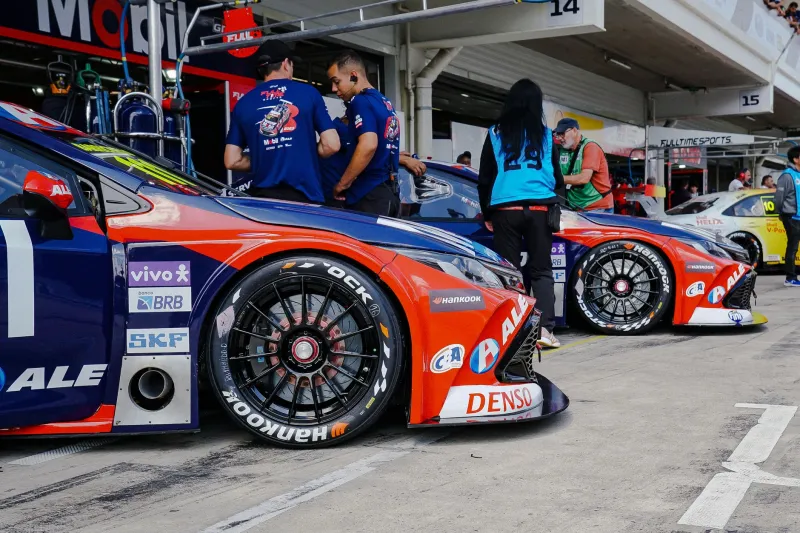
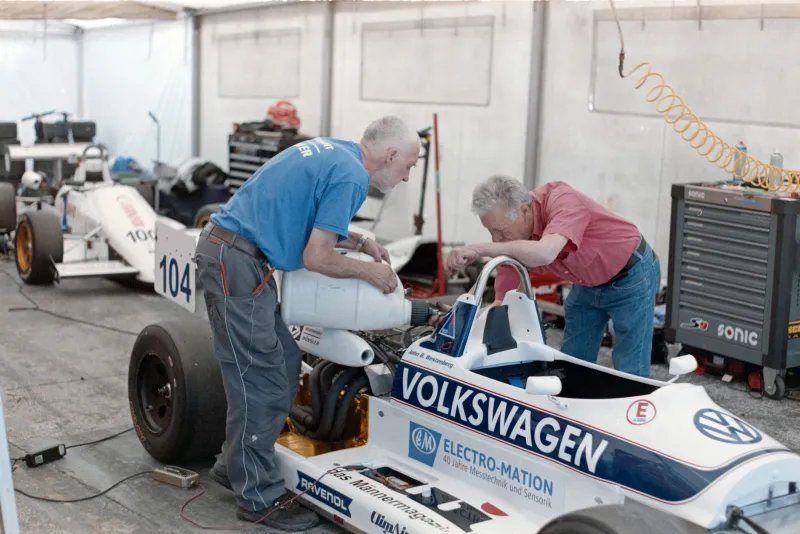
Paddock triage is not glamorous. It starts with a lap of the car that looks more like a vet checking a lame horse than a pit stop. Dave, a mechanic who has been spannering Hot Rods since the Nineties, calls it the sniff test.
“You look for the obvious stuff first — broken suspension, a wheel pointing the wrong way, a puddle under the radiator,” he says. “Then you listen. Is it ticking? Is it hissing? Then you smell it. Hot coolant has a sweetness to it. Burning oil is different. If you smell gearbox oil, you might as well start loading.”
Scrutineers are usually nearby by this point, not to hurry anyone along but to cast an eye over the safety items. A bent bumper is one thing. A cracked rose joint or a fuel line that has been yanked is another. The clerk of the course will want to know if the car is withdrawing, but the crew rarely gives an answer in the first minute. They are still counting.
Fixing it: a maths problem in overalls
The calculation is always the same four numbers: time, safety, cost and points. Time is the most brutal. If you are in the second heat of six and your class is back out in twelve minutes, you are already behind. If the next heat is half an hour away, you can breathe.
Safety is non-negotiable, though crews sometimes pretend otherwise in the heat of the moment. A scrutineer can and will stop a car that looks marginal, and no championship points are worth a cracked weld at speed. Cost comes next. A replacement radiator hose from the spares box is cheap. A new front upright is not. At club level, the difference between fixing and loading often comes down to what is already in the trailer.
“You learn to keep a whole second car in boxes,” says Leanne, who runs a Ministox team with her brother. “Not because you can afford it, but because the alternative is going home at lunchtime. We have a bent-but-straight-enough front bumper that has been on three different cars. It is not pretty. It is fast.”
The final number is points. Championship standings are not usually decided in November, but they are shaped by every heat you finish. If you are fighting for a top-five place, the crew will push harder. If you are mid-table in a club series and the car needs a new gearbox, the maths rarely works.
Flagging it: the hardest word is ‘no’
Withdrawing a car is not the same as giving up. It is a decision that gets made in the paddock, sometimes by the driver, sometimes by the crew chief, occasionally by a scrutineer who has seen something the team has missed. The flag goes up, the paperwork gets signed, and the car sits under a tarpaulin for the rest of the afternoon.
“You can’t spend a points lead in A&E,” says one driver, flatly. He has just climbed out of a car that is steaming gently from a split hose. His crew is already pulling the bonnet off, but he is shaking his head. “If it is just the hose, we go. If the head gasket has gone, we are done. I am not risking an engine for eighth place in a heat.”
That kind of honesty is learned, not innate. Newer racers often want to fix everything, and you can see why. The entry fee is paid, the travelling is done, the family is watching. But the ten-minute clock does not care about sunk costs. The crews who make good calls are the ones who have already decided, before the meeting, what their line in the sand looks like.
Loading it: the quietest call in the paddock
Loading up early feels like a defeat, but it is often the most professional thing a crew does all day. The car goes on the trailer, the tools get packed away, and someone usually finds a brew. If there is a spare seat in a mate’s car, the driver might cadge a lift to watch the final from the bank.
There is a practical upside, too. An early load means you have time to inspect the damage properly, not in a rush of spanners and cable ties. It means you can talk to the scrutineer about what needs fixing before the next meeting. And it means you are not the team still thrashing at the car in the dark while everyone else is in the bar.
“We loaded at half two last month and I hated it,” says Leanne. “But we found a cracked hub when we got home that we would never have seen in the paddock. That could have been a wheel coming off. So, you know — sometimes the day is telling you something.”
What newer racers can take away
The ten-minute rule is not really about ten minutes. It is about having a plan before the car comes in bent. That means knowing which spares you carry, which jobs you can do safely, and which ones you will not touch. It means talking to the scrutineer early in the day, so you are not negotiating under pressure. It means having a mate who can hold a torch and, more importantly, tell you to stop.
It also means being honest about the clock. A club oval meeting is not a Grand Prix. There is no refuelling rig, no reserve car, no team of twenty. There is a trailer, a toolbox, and a handful of people who want to see you out there again. The crews who do it well are not the fastest spanners in the paddock. They are the ones who know when to put the spanner down.
By 2.05pm, car 37 is back out for the third heat. The front corner is a patchwork of used panels and fresh cable ties, and it is not pretty. But it is straight enough, and the driver is grinning. The crew chief checks his watch, nods, and allows himself a small smile. Ten minutes, it turns out, is a long time if you have done your homework.