Sweat, Spanners and Split Seconds: Club Oval Racing Is a Sport, Full Stop
Ask anyone who has spent a Sunday afternoon leaning on the barrier at a club oval and you will hear the same line sooner or later. 'It's a hobby, isn't it?' It is said kindly, usually by someone enjoying a burger and a flask of tea. And it is wrong. Not offensive, not malicious—just wrong. Club oval racing is a sport, and the people doing it are athletes, mechanics, tacticians and weather forecasters rolled into one. The fact that they pay for the privilege and go to work on Monday makes it more impressive, not less.
The fitness bit nobody films
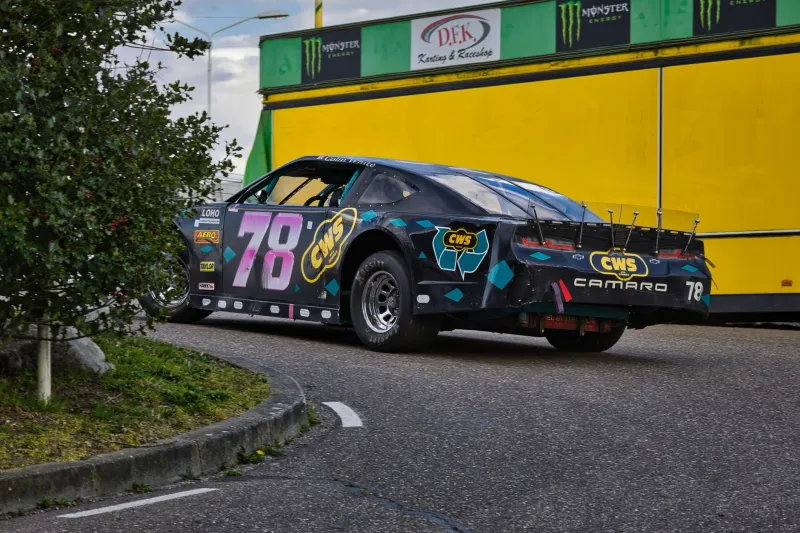
There is no TV camera catching the moment a driver hauls themselves out of a hot car after a 20-lap heat, helmet off, face flushed, race suit stuck to their back. But it happens every weekend at tracks like Mildenhall, King's Lynn, Buxton and Skegness. A short-oval stock car has no power steering, a heavy steel shell and brakes that have to be used with sympathy. Wrestling one through a heat race is closer to a session on a rowing machine than a gentle drive to the shops.
Then there is the neck. Corners come at you in a rhythm—left, left, left—and the head wants to follow the car. Drivers build up neck strength the way a scrum-half works on their core. Add in the adrenaline spike at the green flag, the grip of a dry track, the sweat inside a helmet, and the heart rate is up there with a five-a-side match. The difference is that nobody subs you off after ten minutes. You are out there until the chequered flag or the damage is done.
Decisions at racing speed
The fitness argument is the easy one. The harder one is the thinking. A club oval looks simple from the fence: turn left, avoid the bloke in front. Up close it is a chess match played at speed. Do you go round the outside on a drying track, or sit tight and wait for the inside line to come back? Is the car in front holding you up deliberately, or are they just struggling with a cooked tyre? When do you lift, when do you lean, when do you take the gap that might disappear in half a second?
Heat races matter, too. Points from the heats set the grid for the final. A driver who finishes fourth in a heat might be making a calculated call about tyre saving. A driver who wins might be showing their hand too early. The split-second decisions are real, and they are made with a helmet on, an engine screaming and a barrier never far away.
The pit lane is the second race
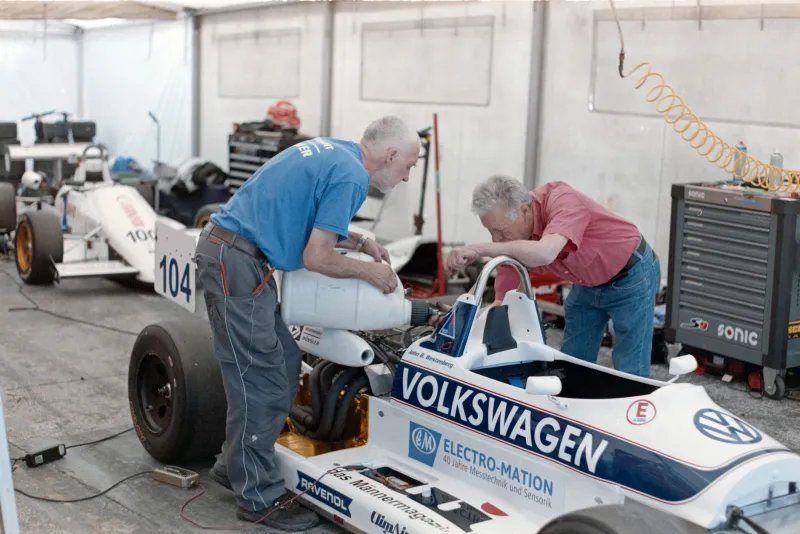
Then the heats end and the real work starts. Between races, a club racer has maybe twenty minutes to change a wheel, straighten a bent bumper, top up fluids and work out why the brakes went soft. The crew—often family, mates, or the bloke from the next pit bay—descend on the car like a pit stop in a cartoon. Cable ties, a big hammer and a roll of gaffer tape have won more club races than any fancy setup sheet.
This is where the mechanical literacy comes in. You cannot race what you cannot fix, and at club level you are usually the one fixing it. Knowing that a car is pushing because the tyre pressures are wrong, or that a misfire is a carb issue rather than electrics, is part of the skill set. It is the same kind of applied knowledge that gets credit in any other sport—just with more swearing and fewer water bottles.
Weather calls and the referee in the sky
Club oval racing also demands a kind of tactical patience that other sports reserve for cricket. The British weather is not a backdrop; it is a competitor. A shower before the final changes everything. Do you go out on wets or gamble on the track drying? Does the clerk of the course water the track, and if so, when? Drivers and crews read the sky, the track surface and the forecast on their phones, then make a call that could win or lose the race.
That is not a hobbyist's whim. It is a decision made under pressure, with points on the line and a car that might be completely wrong for the conditions. The best club racers are the ones who adapt quickest—who can feel a greasy patch through the steering and adjust before the next corner.
Why the 'hobby' label sticks
So why does the H-word linger? Partly because club racing is amateur. Nobody is paying these drivers to be there. They fund it themselves, often on a budget that would make a Formula 1 accountant wince. Partly because it is friendly. The paddock is full of people lending each other tools and helping push cars back to the bays. That warmth can look like a weekend pastime from the outside.
But amateur does not mean unathletic. Club rugby players are amateurs. Fell runners are amateurs. Park cricketers are amateurs. Nobody calls them hobbyists in a way that diminishes what they do. The same courtesy should apply to the people who race stock cars, hot rods and ministox on a Sunday. They train, they prepare, they compete, and they hurt when it goes wrong.
The sport is already there
None of this is a plea to change club oval racing. The friendly vibe is the point. The fact that you can wander into the pits, ask a stupid question and get a proper answer is what makes it special. But let's give the drivers and crews the credit they have earned. When someone says it is just a hobby, smile, offer them a go in the passenger seat, and watch their face at the first green flag.
Helmet on, hobby off. Not because hobbies are rubbish—they are not—but because this one deserves the word sport. See you at the fence on Sunday.