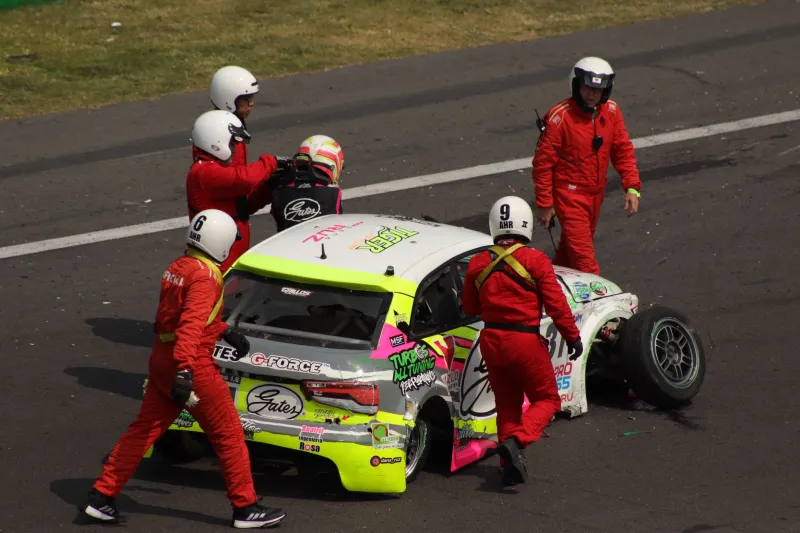
Rain, Rivals and the Rugby Club: The Art of Piecing Together a Short-Track Season

On a damp Tuesday in November, most short-track promoters are already living in next summer. The cars are tucked away, the trophies have been handed out, and the group chats have gone quiet. Behind the scenes, though, the 2026 fixture list is still being nudged, argued over and redrawn. It is less a calendar than a jigsaw — one where the picture on the box keeps changing.
Ask a promoter what goes into a season and you will not hear much about glamour. You will hear about track hire, rugby fixtures, travel distances, noise curfews, reserve dates and the delicate art of not clashing with the promotion two counties over. The fixture list is the first race of the year, and nobody gets a trophy for winning it.
The first piece: a track you do not own
Grassroots oval racing rarely happens in a purpose-built stadium with a permanent office and a coffee machine. More often it is a rented field, a shared stock car track, a speedway bowl, a farm, or a venue that spends most of the week being something else entirely. That shapes everything.
One promoter in the Midlands puts it simply: 'We don't own the ground. We borrow it, and we have to give it back in a state the landlord recognises.' That means checking around agricultural shows, dog meetings, practice days, fun fairs and the small matter of the venue's own fixtures before a single race date can be confirmed. A track that is free on a Saturday in June may be booked solid in July. A venue that works brilliantly in dry weather may have drainage that turns the car park into a mud bath after a week of rain.
So the first piece of the jigsaw is not the headline meeting. It is the boring question: when can we actually get in, and when can we get out?
Weather, but not the forecast you think
British weather is the obvious villain, but promoters do not plan around a forecast made two weeks out. They plan around patterns. Late spring is a gamble. High summer looks safer until you remember that families go on holiday and volunteers want a weekend off. September can be gorgeous or biblical. October is for the brave.
A promoter in the north-west says the 2026 calendar was built with more reserve dates than usual. 'You can book the best date in the world and still lose it to rain,' she says. 'What you need is a second date that does not upset the first one, and a set of racers who understand why you are moving things.'
Rain-offs are not just a lost afternoon. They are lost gate money, lost travel for fans, lost entry fees and a knock to momentum. That is why some promotions would rather run eight solid meetings than twelve that are always one shower away from chaos. Fans may grumble about gaps in the calendar, but a gap is often a promoter trying to protect the meetings that remain.
Rivals are not just on track
The fixture list is also a map of local loyalties. Short-track fans are a travelling bunch, but they have budgets. Racers have budgets too, and many of them race at more than one venue. Clash a meeting with a big stock car event ninety minutes away and you may lose half your car park. Clash with a local football derby, a school fete or a rugby international and you lose the casual walk-up crowd that makes grassroots meetings feel alive.
'We are all fishing in the same pond,' says one promoter in the south-east. 'You can pretend you are the only show in town, but the fans will tell you otherwise.' The result is a weird mix of rivalry and cooperation. Promoters watch each other's dates. They make phone calls. Sometimes they move a meeting by a week to avoid a clash that would hurt both of them. Sometimes they do not, and everyone learns a lesson.
The rugby club problem
Several grassroots venues share space with rugby clubs, and that brings its own fixture puzzle. A clubhouse is a gift: toilets, a bar, a car park, sometimes even a kitchen. But rugby clubs have their own Saturdays, their own tournaments and their own loyalties. A Six Nations weekend can empty a short-track meeting faster than a rain cloud. A club fixture can fill the car park before the first heat.
One fan I spoke to said he had learned to check the rugby fixtures before booking a weekend away. 'It sounds daft, but if the local club is at home, the roads are busier and the pub is packed. If they are away, the whole town feels different.' Promoters know this. They read the local sports pages as closely as they read the weather apps.
The date that actually works
A fixture is not just a date on a poster. It is a small operation. You need a medic, a recovery truck, a scrutineer, a clerk of the course, a starter, a burger van, someone to unlock the gate and enough volunteers to put the fencing back up when the wind takes it. A Saturday night may suit racers, but a Sunday afternoon may suit families. A bank holiday may bring a crowd, but it may also bring traffic and a tired crew.
'We'd rather run a meeting that feels right than a meeting that looks busy on paper,' says one promoter. 'If the volunteers are knackered, the fans can feel it. If the racers are rushed, the racing is worse. The date has to work for the people who make the meeting happen.'
That is the compromise behind the 2026 calendar. Not a perfect season, but a workable one. Rain will still win some weekends. Rivals will still book the same Saturday. The rugby club will still have a home game. But somewhere between the spreadsheets and the phone calls, a promoter will find a date that clicks — and on that afternoon, when the first green flag drops, the jigsaw will look like it was meant to fit all along.