The Ones Who Stay Till Eleven: A Night With the Volunteers Who Run Grassroots Oval Racing
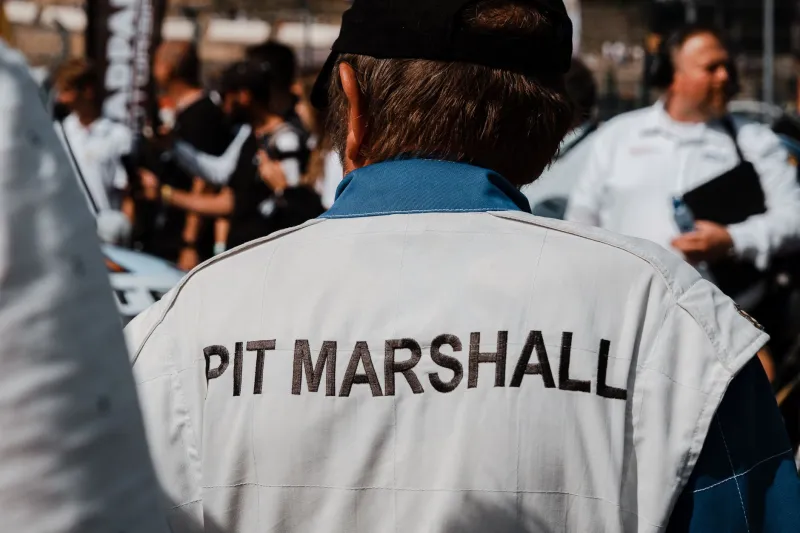
Arrive at a UK oval track at half four on a Saturday afternoon and you'd be forgiven for thinking nothing is happening. The track is empty, the burger van is still setting up, and a bloke in a flat cap is slowly walking the fence line with a clipboard. Two hours later there are forty cars in the paddock, a PA system crackling into life, and a small army of people in orange and yellow hi-vis moving with the kind of quiet purpose you only get from doing a job a hundred times.
Those are the volunteers. They're the reason a club-level meeting can happen at all, and the reason it can happen for the price of a ticket and a programme.
The first ones in
Long before the first heat, the gate staff are on. They're checking licences and signing on drivers, handing out transponders, pointing newcomers towards the right queue. In the paddock, a marshal is trying to fit forty trailers into a space designed for twenty-five, and doing it with good humour.
Then there's scrutiny. The scrutineer's job is the one drivers grumble about and then quietly rely on. Belts, helmets, seats, fuel, ballast, numbers, kill switches, fire extinguishers. One club scrutineer reckoned he finds something loose on roughly one car in ten — a battery clamp, a missing nut, a harness mounted with washers that are too small. He doesn't enjoy failing cars. He enjoys not having to explain to a family why someone got hurt.
On the bank
The flag marshals are the ones you actually see. They're posted around the circuit with a flag, a radio and a fire extinguisher, often standing in the cold for three hours. Their job is to spot trouble before the drivers do: oil on turn three, a car that's stopped on the racing line, a driver who isn't moving.
The radios matter. A marshal calling 'oil, turn three' gets that message to race control in seconds, and the yellow comes out before the next group arrives. It looks simple. It isn't. Marshals train for it, through club days and the governing body's marshal pathway, and the good ones develop a sixth sense for when a car is about to do something daft.
The scoreboard never blinks
Lap scoring is the least glamorous job at any meeting and the one most likely to get a driver knocking on the window. Electronic timing helps, but someone still has to sit with a board and a pen as a backup, because transponders fail and power cuts happen. One scorer told me about a meeting where the timing system died mid-final; she scored the last eight laps by hand off a stopwatch and a notebook, and the result stood.
The people you hope never to meet
Every meeting needs medical cover, and the volunteers and staff who provide it are the quiet insurance policy on the whole night. First aiders, paramedics, rescue crews — they sit through heat after heat hoping for a dull evening. When something does happen, they're on the track before most spectators have realised there's a problem.
That cover costs money. Clubs fund it through gate takings, raffles and programme sales, which is why the person selling 50/50 tickets matters as much as anyone.
The invisible shift
Behind every meeting there's a web of small jobs: catering, the tea urn, commentary, results, the person who sweeps the pit lane at eleven at night. None of it is paid. All of it is why your entry fee stays modest and your local track stays open.
Why it stays affordable
A typical club meeting needs somewhere between twenty and forty volunteers to run safely. If every one of those roles had to be paid at even a modest hourly rate, entry fees and ticket prices would climb sharply. Volunteering isn't a nice extra in grassroots oval racing — it's the business model.
How to get involved
The best time to start is now, in the off-season, when clubs are planning and training. Look up your local club's website or social media, or ask at the signing-on desk next time you're spectating. Most will bite your hand off.
Be honest about what you can do. One meeting a month is plenty to start. Track marshal and gate duty are the usual entry points, and no experience is needed — you'll be paired with someone who's done it for years. Wear sturdy boots, bring waterproofs and a flask, and listen more than you talk.
Ask about training. Many clubs run marshal days, first aid courses and radio training, sometimes funded. If you're interested in scrutiny, say so — it takes time to learn, and clubs are always short.
And if you're a driver, say thank you. Not just at the end of the night, but when a marshal pulls you over for a word. They're not out to spoil your evening. They're the reason you get to have one.